• info@metatronmining.com.au
  • +61 406 455 767
  • By mmc-admin
  • April 19, 2025
  • No Comments

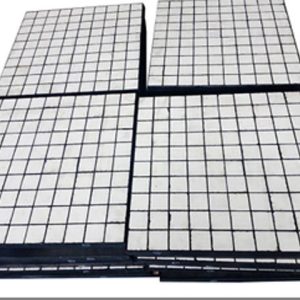
Sintered Carbide Liners

**Sintered Carbide Liners** are highly durable protective linings made from tungsten carbide or other ceramic-metal composites, designed to withstand extreme wear, corrosion, and high temperatures in aggressive industrial environments. These liners are produced using a sintering process, where powdered carbide materials are compacted and heated to just below their melting point to form a dense, hard, and resilient structure. Due to their exceptional hardness and toughness, sintered carbide liners are commonly used in mining, cement, power generation, and chemical processing industries to protect equipment such as chutes, cyclones, hoppers, and mill interiors.

The primary advantage of sintered carbide liners is their remarkable **abrasion and erosion resistance**, which significantly extends the service life of critical equipment. In applications involving abrasive slurries or high-velocity particulate flow, these liners prevent metal surface degradation, reducing downtime and maintenance costs. Sintered carbide maintains its integrity even at elevated temperatures and under high mechanical stress, making it ideal for demanding applications where both mechanical and chemical wear are persistent challenges.

Description

Another notable feature of sintered carbide liners is their **customizability**—they can be manufactured in various shapes and sizes to fit complex equipment geometries. They are often preferred over other wear-resistant materials like rubber or standard steel liners due to their superior performance and longevity. Although the initial cost is higher, the **long-term savings in maintenance and equipment replacement** make sintered carbide liners a cost-effective solution for industries aiming for high efficiency and reduced operational downtime.

PHYSICAL PROPERTY UNITS TYPICAL VALUE
Composition SiC
Grain Size μm 4–10
Density g/cc 3.15
Hardness (Knoop) GPa 2800
Modulus of Rupture MPa 380
Tensile Strength MPa 250
Compressive Strength MPa 3900
Elastic Modulus GPa 410
Coefficient of Thermal Expansion
(20–1000°C)
1 × 10⁻⁶/°C 4.0
Thermal Conductivity W/mK 125
Poisson’s Ratio 0.16

All properties are at room temperature (20°C) unless otherwise stated.

Leave a Reply

Your email address will not be published. Required fields are marked *